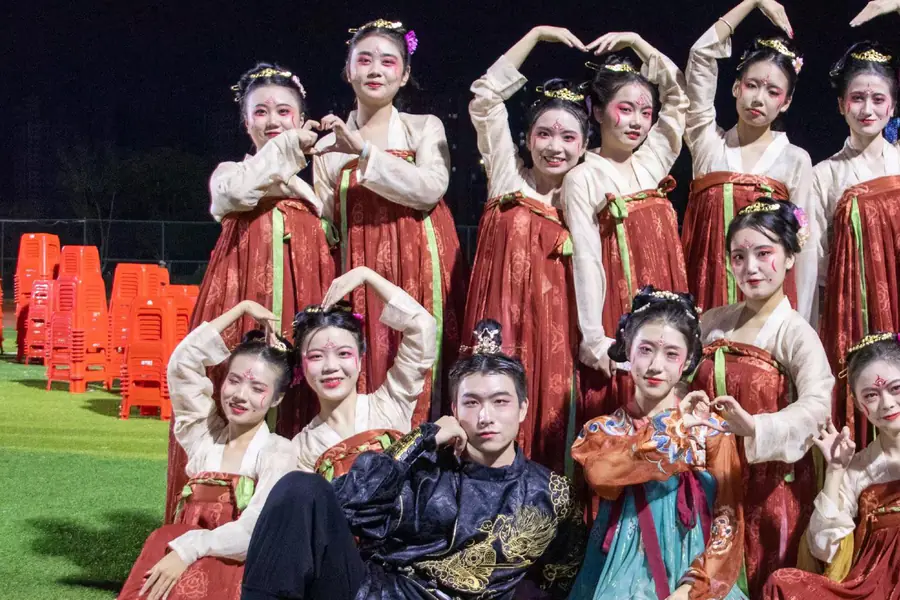
Comfortable Hanfu starts with a collar that sits well, a secure waist and a hem that works with your shoes. Build those foundations first, then choose colour and accessories for the occasion.
Start with what you will actually be doing
A walk in the park, a lantern outing and a wedding reception ask different things of an outfit. For a day with plenty of walking, choose a hem that clears the ground and sleeves you can manage at a table. A lantern outing may involve queues, steps and crowded paths, so long floating scarves and trailing hems need particular attention. At an indoor reception, sitting for a meal can reveal a tight waistband that felt comfortable during a quick standing fitting.
For a wedding, establish whether you are dressing as a member of the wedding party or as a guest, and ask about any agreed colours or dress requirements before choosing elaborate accessories. A guest does not need to reproduce the bride’s headdress. An event with a specified historical period or role calls for a different kind of preparation: check the organiser’s references for the garments and accessories. Everyday contemporary styling can be more flexible.
Build the base outfit before adding an outer layer
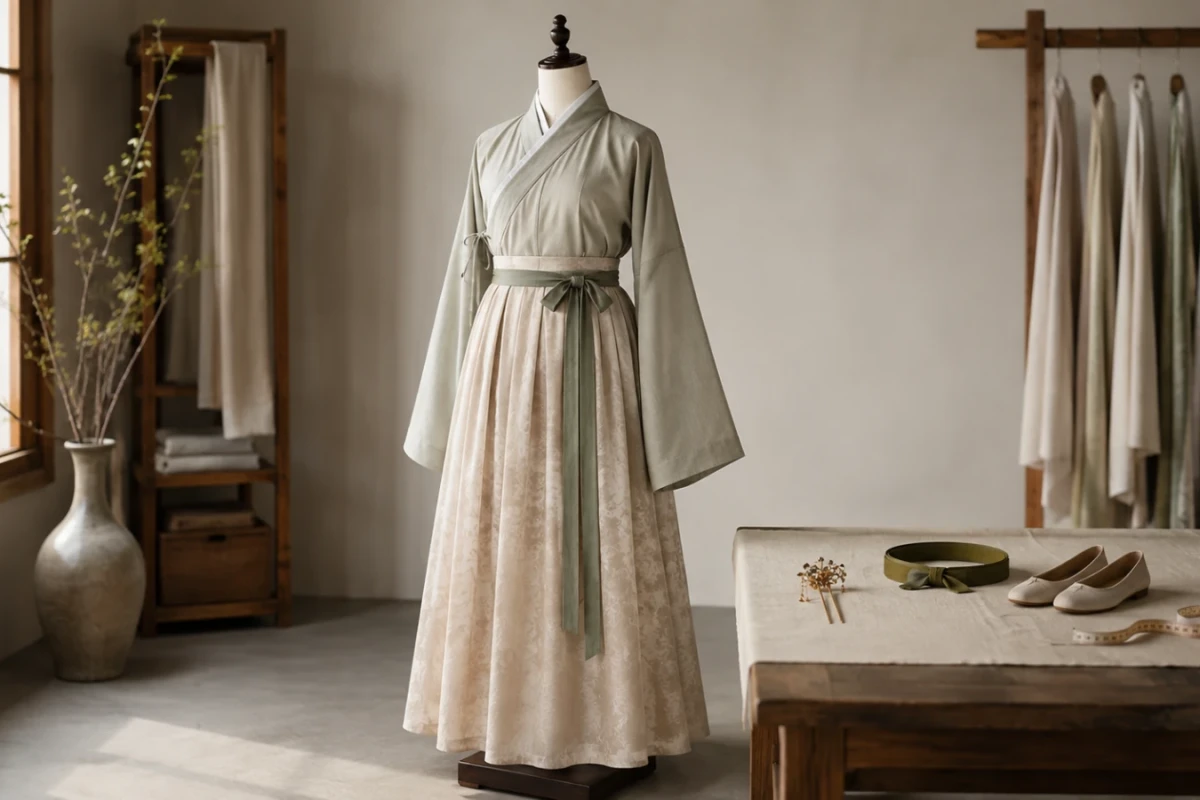
Begin with one top or skirt you already like. Lay out the underlayer, main garment, lower garment and shoes together, then consider their weight, length and dressing order. A pale skirt may look opaque indoors but reveal an underlayer against a bright window. Try a smooth underlayer close to your skin tone or the skirt colour, and check the actual result in daylight. Adding a thick underskirt with a conspicuous edge can create a new problem rather than solve the first one.
The mannequin illustration below uses a muted green-grey top, a pale skirt and a coordinating tie. The shoes and hair accessories remain separate on the table, making it a useful example of building the clothing first. It is a contemporary editorial illustration, not a historical reconstruction. During your own fitting, leave off the outer robe and neck ornaments initially so that you can see the shoulder, collar and waist clearly. Add another layer only after the base sits comfortably.
| Your plans | A useful starting combination | What to try before leaving |
|---|---|---|
| Walking or visiting an exhibition | A manageable top, practical hem and familiar shoes | Raise your arms and walk without pulling the collar or stepping on the hem |
| Lantern outings and festivals | A comfortable base with one distinctive colour or hair accessory | Turn around and check for loose pieces that could catch in a crowd |
| Indoor receptions and wedding guest wear | An outfit that respects the host’s dress requirements | Sit through a short meal and check the waist and skirt panels afterwards |
Settle the collar, waist and skirt panels
With a crossed-collar garment, smooth the inner layer before using the garment’s own inner and outer fastenings. Tightening the outer tie is not a reliable remedy for a collar that keeps opening. If the neckline lifts or pulls backwards when you raise your arms, check for fabric bunched under the arm, a body caught beneath the waistband, or an unsuitable size. On a round-collar robe, look for an even neckline and a fastening that lies flat; a visible crossed inner collar is not automatically a styling error.
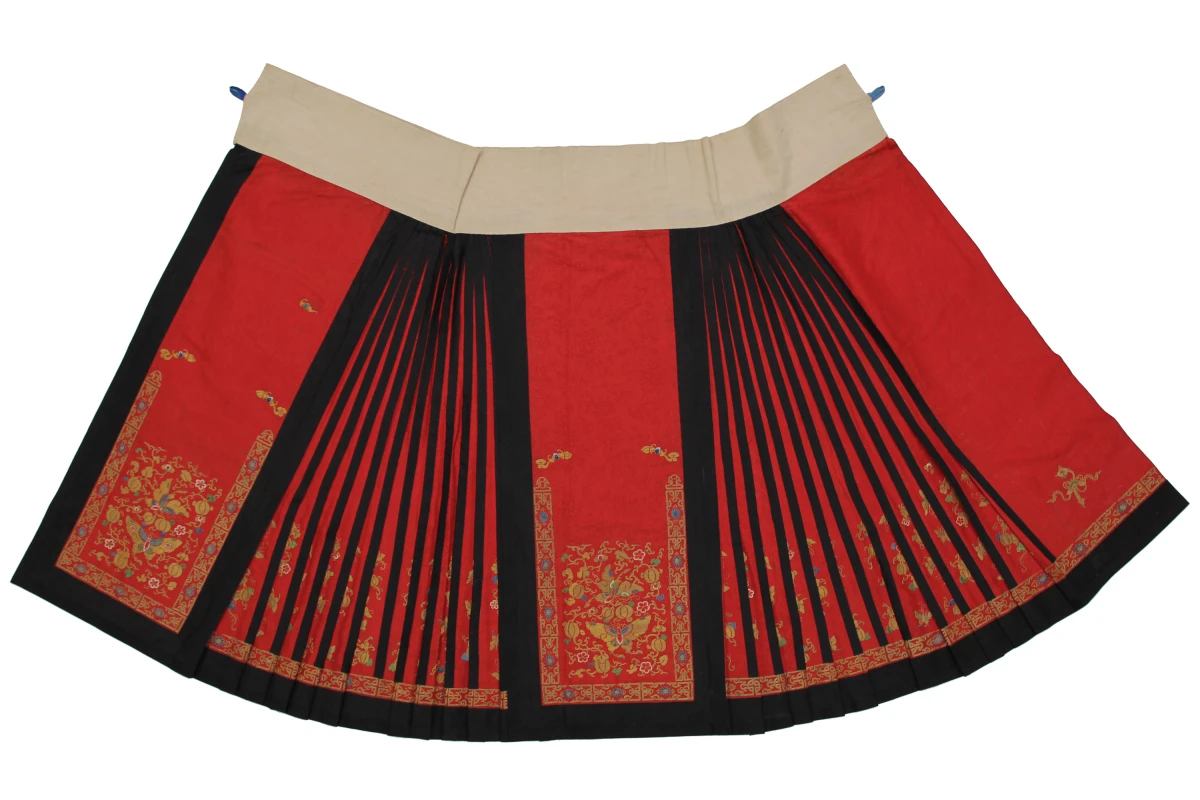
For a mamian skirt, pay attention to the relationship between the flat front and back panels and the pleated areas at the sides. Lay the skirt out before wrapping it and locate its panels, pleats and original fastenings. The China National Silk Museum’s record for a red patterned mamian skirt describes two skirt sections, front and back panels and pleats at their sides. Modern versions can use different waist constructions, including zips or buttons, so one tying method will not suit every skirt.
The open view of The Met’s skirt below shows flat areas alternating with grouped pleats, a much more useful view for understanding that arrangement than an isolated embroidery detail. It is a nineteenth-century collection object, not a fitting photograph for a modern product. With your own skirt, centre the panels in a relaxed standing position, then walk, sit and stand again. If they repeatedly rotate to one side, check the overlap, waist allowance and tension of the fastenings instead of simply pulling the front back into position for a photograph.
Fit the hem with your shoes and plan for care
Do not estimate skirt length from height alone. Decide where the waistband will sit, put on the intended shoes and measure from that position to your preferred hem level. Check where the seller starts its garment measurement. A hem that clears the ground is more useful for ordinary walking than a trailing photographic effect. For the top, compare body and sleeve length as well as chest measurements, and see what happens when you raise your arms. The same size letter does not imply the same movement allowance across different cuts.
Try fabric for weight, transparency, feel against the skin and the expected temperature. A lightweight-looking garment is not necessarily cool: lining, weave density and the number of layers also matter. Read the fibre composition and care label rather than judging silk content from shine. After wearing, inspect the collar, underarm areas and hem for sweat or dirt, then follow the label. Metallic threads, embroidery and easily snagged surfaces should not be scrubbed back and forth with a garment brush, and different fabrics need different pressing treatment.
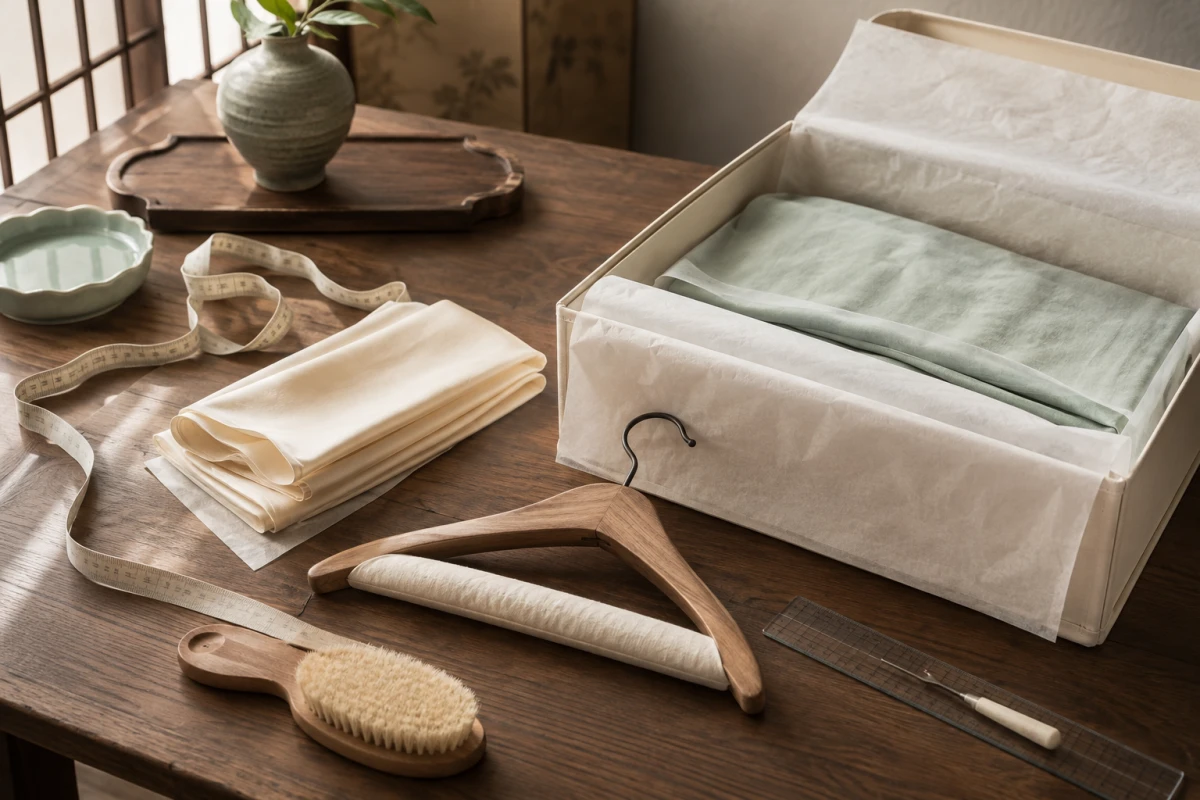
The measuring tape, padded hanger and divided storage box in the care illustration have separate purposes; they are not a universal cleaning recipe. Support garments that are suitable for hanging, and avoid suspending a heavy skirt from a narrow point on its waistband. When flat storage is appropriate, follow the existing pleat direction and separate accessories that could snag the fabric. Let clothing dry fully before putting it into enclosed storage.
Give colour and accessories a clear order
For a coordinated contemporary outfit, let the largest area of clothing establish the main colour. Pick a smaller colour from its pattern for a hair ribbon, belt or earrings. A skirt with a strong dark-red pattern can work with a quieter ivory or pale-grey top and just a small red accent near the hair. This is a styling option, not a historical colour rule. Your colouring, the light and your own preferences can all lead to a different choice.
If the collar, cuffs and skirt already carry substantial decoration, consider leaving the neck less crowded. A tall hairstyle with long pins does not also require large earrings and a heavy chest ornament. Short hair works with Hanfu too: a simple clip or ribbon can be enough, without an uncomfortable quantity of added hair. Test accessories while turning and lowering your head. Pins should not press into the scalp, and dangling pieces should not repeatedly strike the face.
Give the finished outfit a ten-minute trial
Wear the complete outfit with the actual shoes and bag. Walk a short distance, sit, stand, reach and step onto a stair. Decide where the phone will go, whether a sleeve reaches the table when you pick something up, and whether the bag strap rubs against embroidery. Gather a long outer layer carefully when needed instead of tugging on one small section. Keep wide sleeves, scarves and hems clear of escalators, rotating doors and open flames.
Finish with front, side and back photographs in a natural stance. Look for a shifted collar, a rolled waistband or an unexpectedly uneven hem. If you still have to keep pulling up the skirt or rearranging the neckline, change the size, adjust the underlayer or choose a different piece. A successful outfit lets you walk, sit and eat without constant correction, and leaves you with a clear plan for cleaning and storing it afterwards.