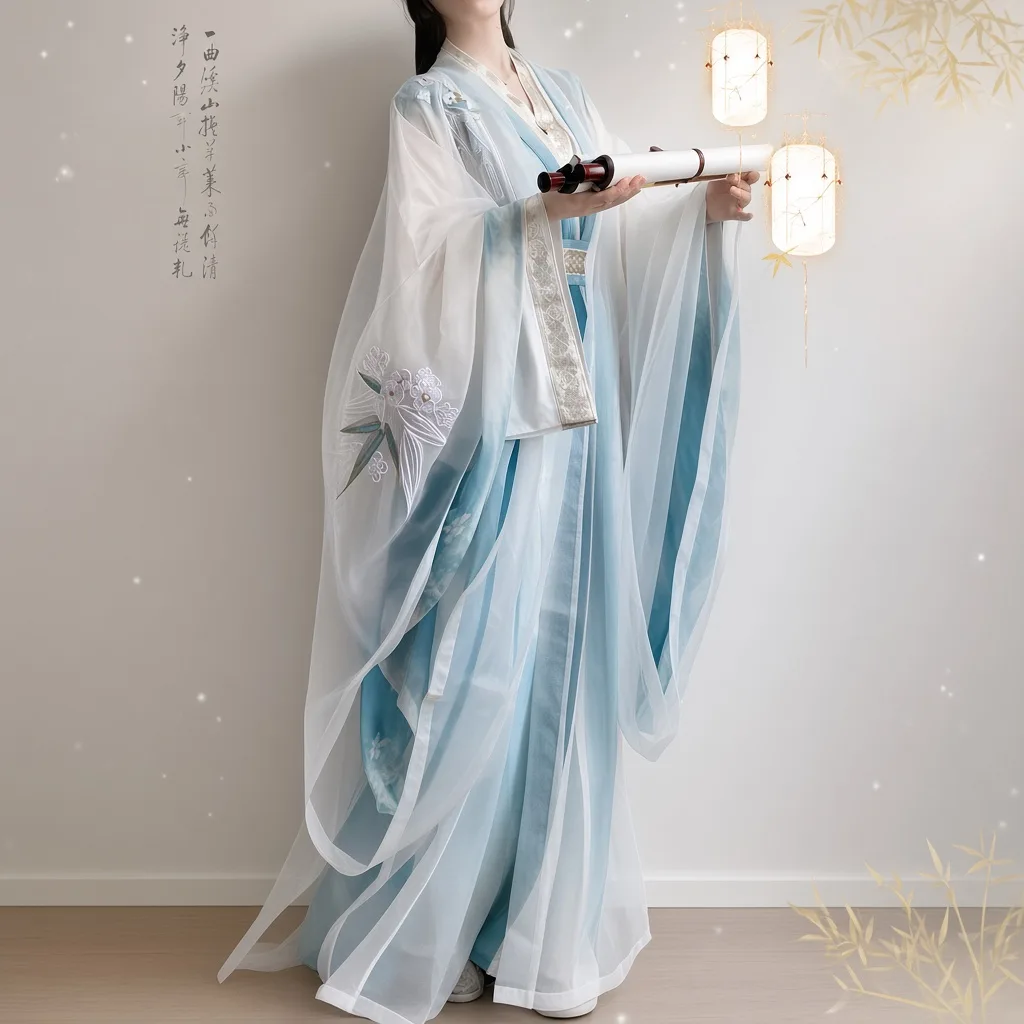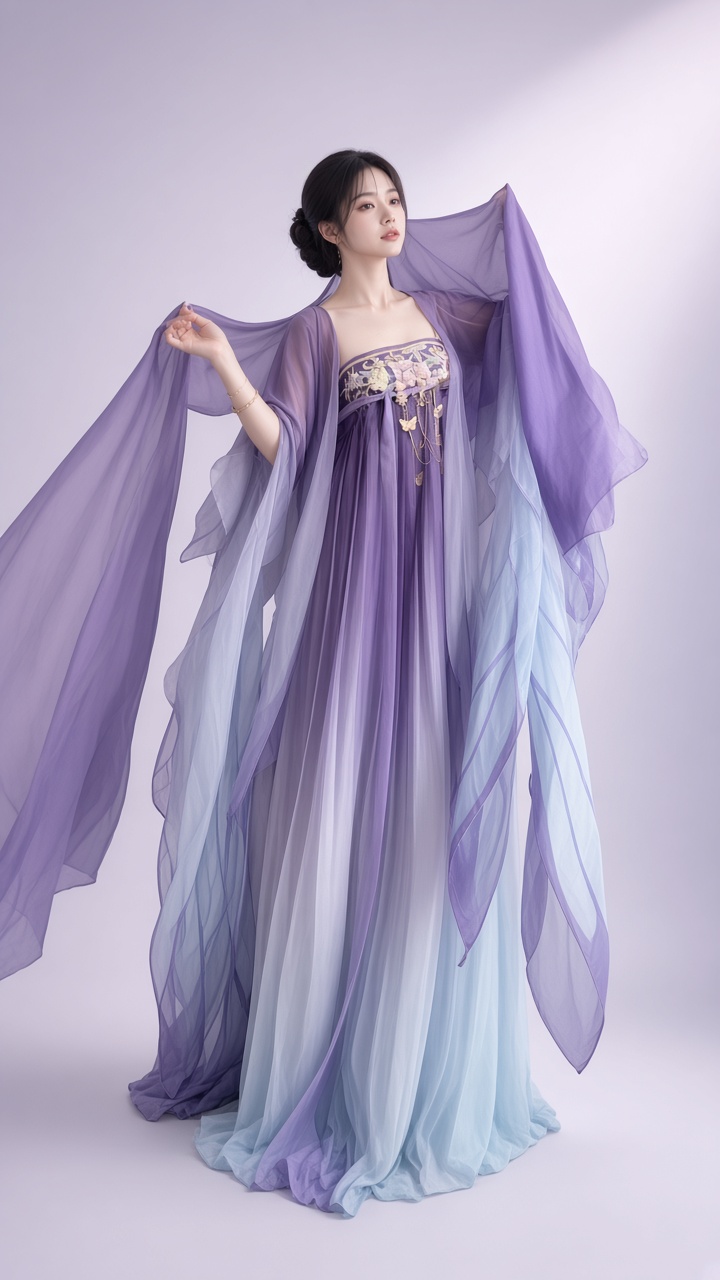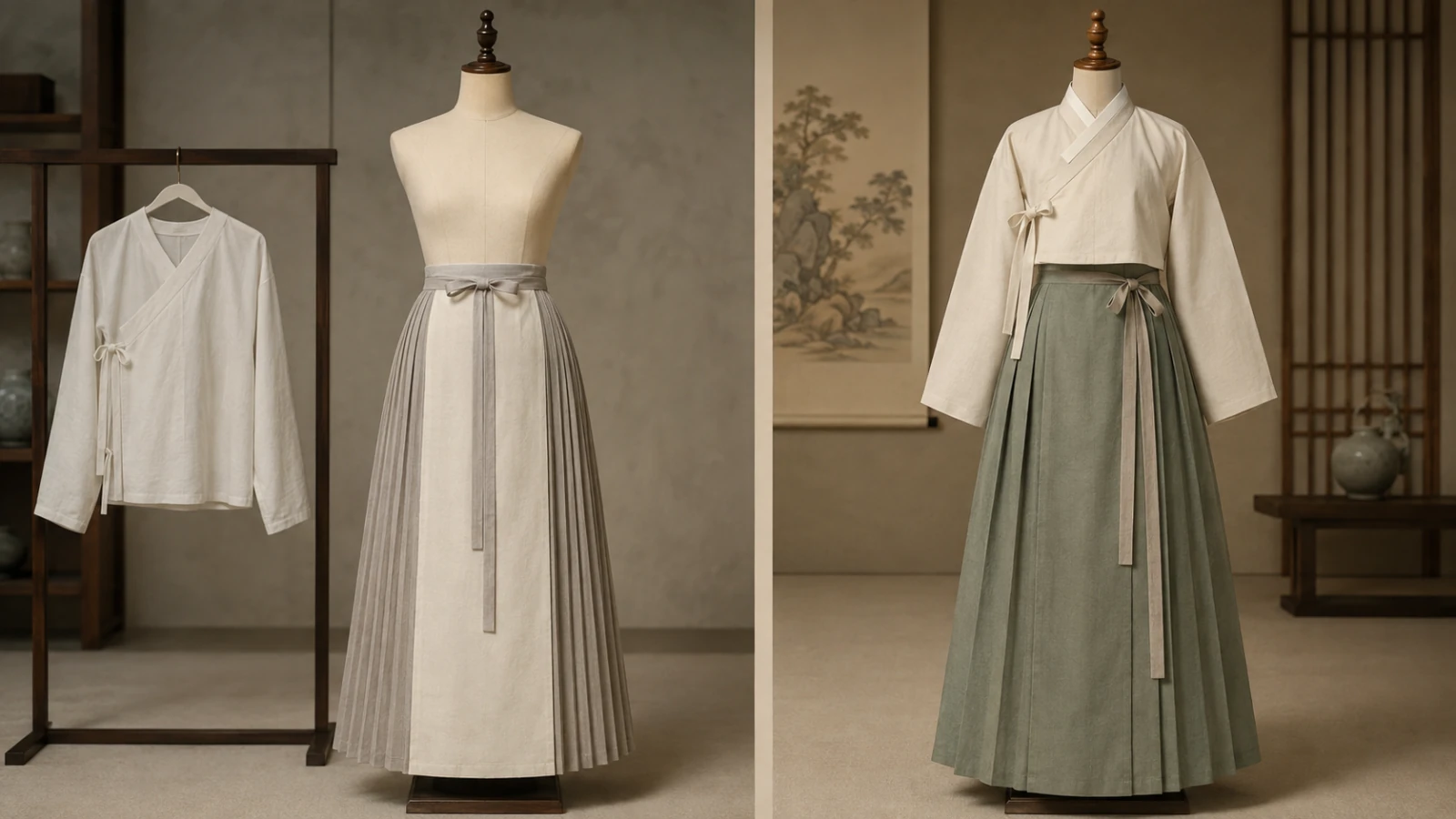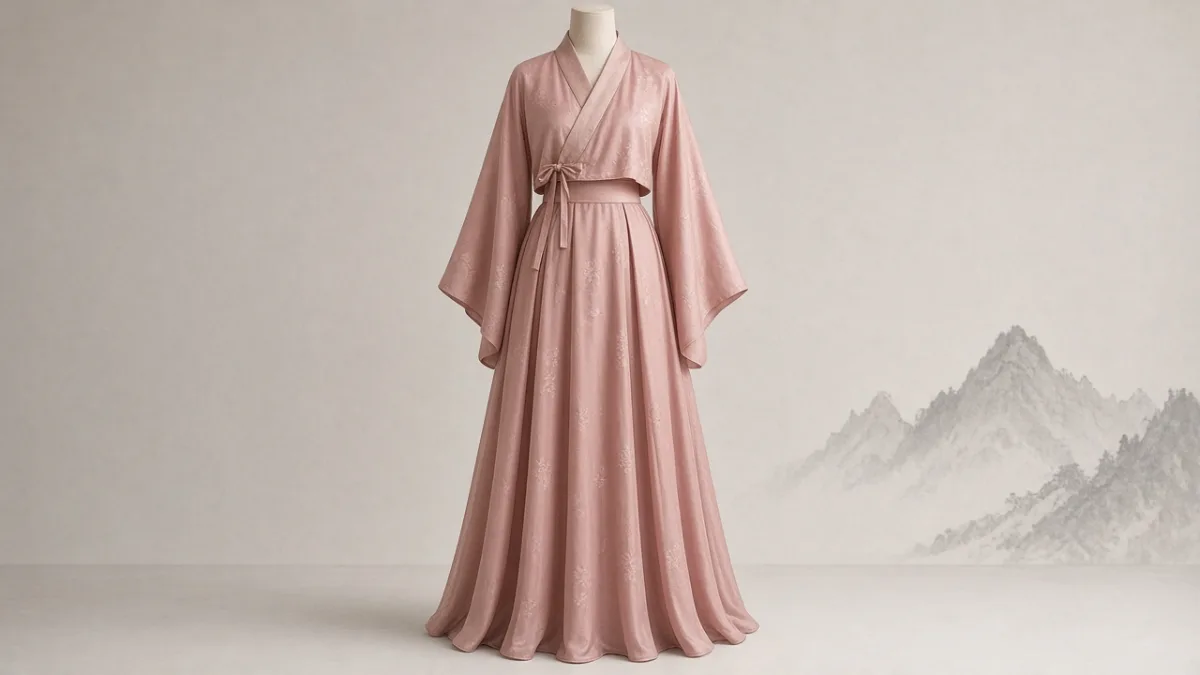
A waist-length ruqun is a short top and a long skirt. The weight sits on the waistline. Pulling the skirt higher does not make it waist-length. This note covers where that line sits, who should buy it, and what to measure.
The shelf is women’s forms. Names are in the form list. The long size note is size and care.
Which line “waist-length” means
- Short top, long skirt. What you watch while walking is where the waistband lands, not how wide the sleeve is.
- Waist-length is not “tie it a bit higher.” If the waistband fights the armhole, read this piece’s waist chart before you talk about ease.
- Wide sleeves and narrow sleeves change the top. They do not change “top plus skirt.”
Pin the waistline first. Color and sleeves come after.
Who should buy one, and who should wait
Buy it if you accept the waistband at the natural waist or a little above, a hem past the ankle that does not drag on flat ground, and you will measure to this piece’s chart. For a garden or a photo, a stable waist and sleeves that stay out of your hands are enough.
- Wait if you will hike the hem to lengthen the leg. Move this waist and the armhole starts arguing with the skirt.
- Wait if the sleeve must drag the floor. That is a different garment. Tying this skirt higher will not do it.
- Wait if you will not measure the bare waist and will order “your usual size.”
The sample is Huachaoji Jinyu waist-length ruqun, with its own size note by the buy box. A mamian is a different skirt: mamian primer.
Three measurements
- Bare waist, tape on the narrowest point, ease as this piece says.
- Length from the top of the waistband to the hem you want. Not the model’s height.
- Sleeve: arms down, then raise them once. Wide sleeves need a check for sweeping the floor.
What those three errors look like is in three measuring mistakes.