Many readers first meet Hanfu sizing and care through a photograph, a product name, or an occasion they need to dress for. A useful guide looks past that first impression and connects visible construction, material, fit, movement, and context so the final choice still makes sense away from the campaign image.
Fibre is only the first layer
Body measurements, finished-garment measurements and wearing ease must be separate; care follows fiber, decoration and maker label rather than one universal Hanfu rule. Silk, cotton, linen, regenerated fibre, and polyester describe fibre content, not the whole character of a garment. Yarn, weave, density, finish, lining, embroidery, metallic thread, and applied ornament all change drape, heat, shine, durability, and price.
Before choosing Hanfu sizing and care, define the real occasion, the hours of wear, the expected movement, the climate, and the points that cannot be compromised. Fibre, weave, finish, decoration, finished measurements, and care instructions answer different practical questions. Starting from those needs prevents an attractive photograph or a familiar label from making the decision on the reader’s behalf.
Construction changes how cloth behaves
Verify shoulder, chest, waist, garment length, sleeve span or sleeve length, skirt length and measurement method, including planned underlayers. The same-looking cloth can behave differently once cut into a full skirt, lined robe, narrow sleeve, or layered set. Examine seams, stress points, hems, fastening, embroidery reverse, and contact between rough decoration and delicate fabric. These details often explain comfort and lifespan better than a broad material name.
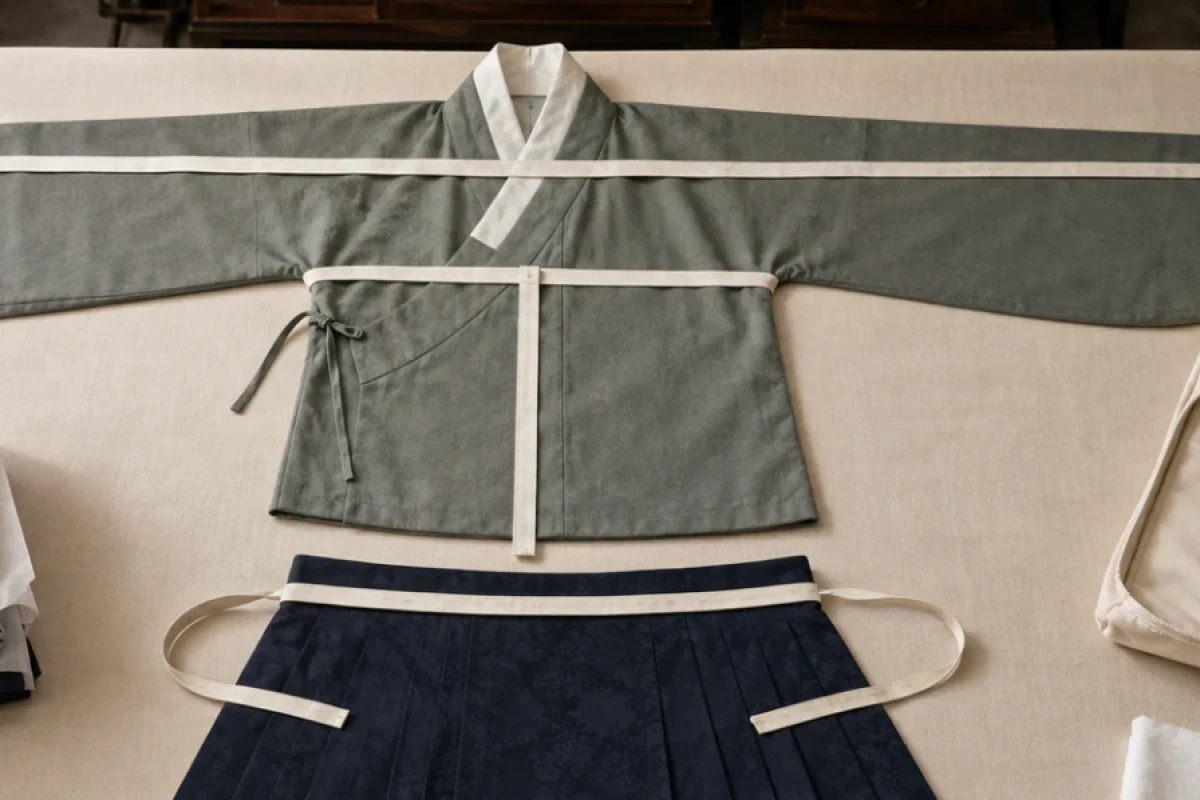
Read a page about Hanfu sizing and care from the whole garment toward the details: front, side, back, opening, inner layers, fastening, measurements, and included pieces. A close-up may be excellent for embroidery yet useless for judging proportion. When views disagree, the complete structure deserves more weight than the most dramatic image.
| Material layer | Test or measurement | Care and claim risk |
|---|---|---|
| Fibre and weave | Composition label plus close front/back views and this evidence: Verify shoulder, chest, waist, garment length, sleeve span or sleeve length, skirt length and measurement method, including planned underlayers. | A visual sheen is treated as fibre certification |
| Fit and construction | Finished garment measurements, method, seam allowance, lining, and planned underlayers | Only body height/weight or a size letter is supplied |
| Surface work and care | Reverse embroidery, loose threads, dye-transfer test, maker care label, and component-specific storage | “Handmade” or “dry-clean only” is repeated without process detail |
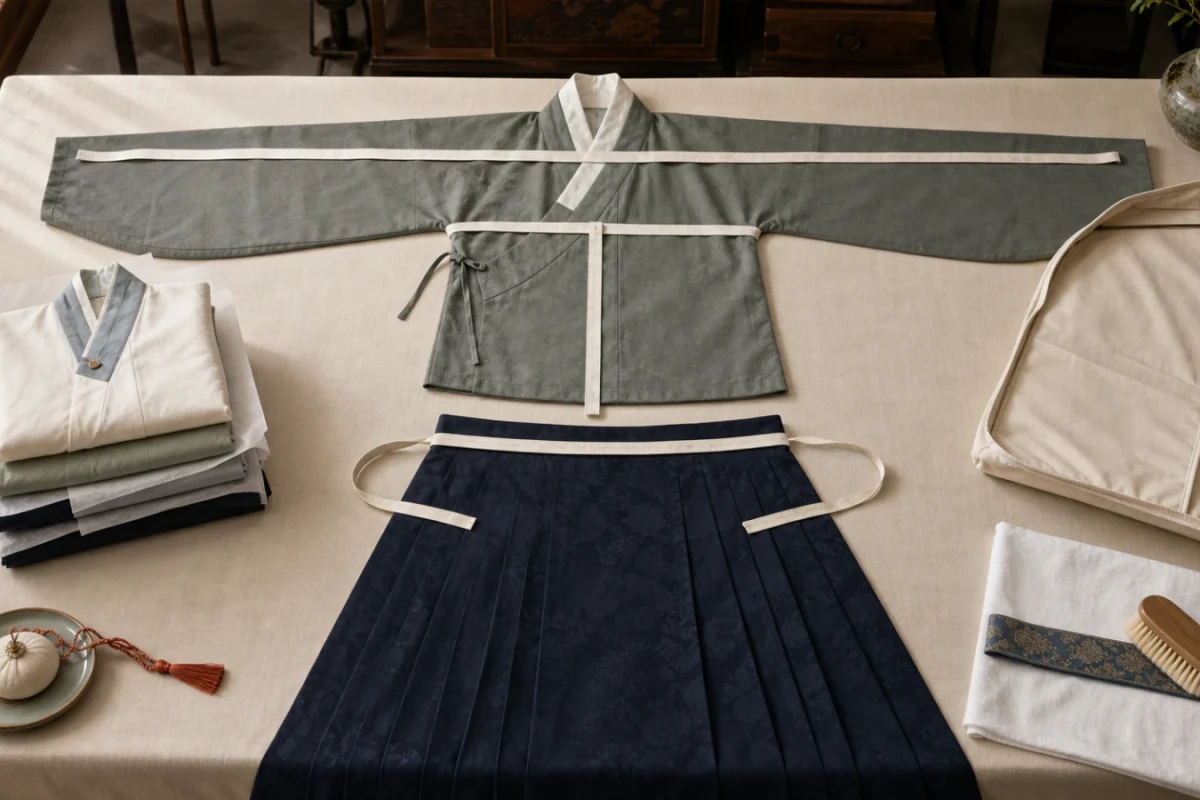
Measure the finished garment
Use finished measurements and a consistent flat-measure method. Compare bust, waist, garment length, sleeve reach, rise, and hem with an item that already fits, then add the underlayers required by the outfit. Height and weight charts are only a starting point because body proportions and preferred ease differ. Hanfu sizing and care must also work away from the camera. Try the planned underlayers and shoes, then sit, walk, climb a step, raise both arms, and repeat the longest action required by the occasion. A small imbalance at the waist, collar, cuff, or hem often becomes obvious only after several minutes of movement.
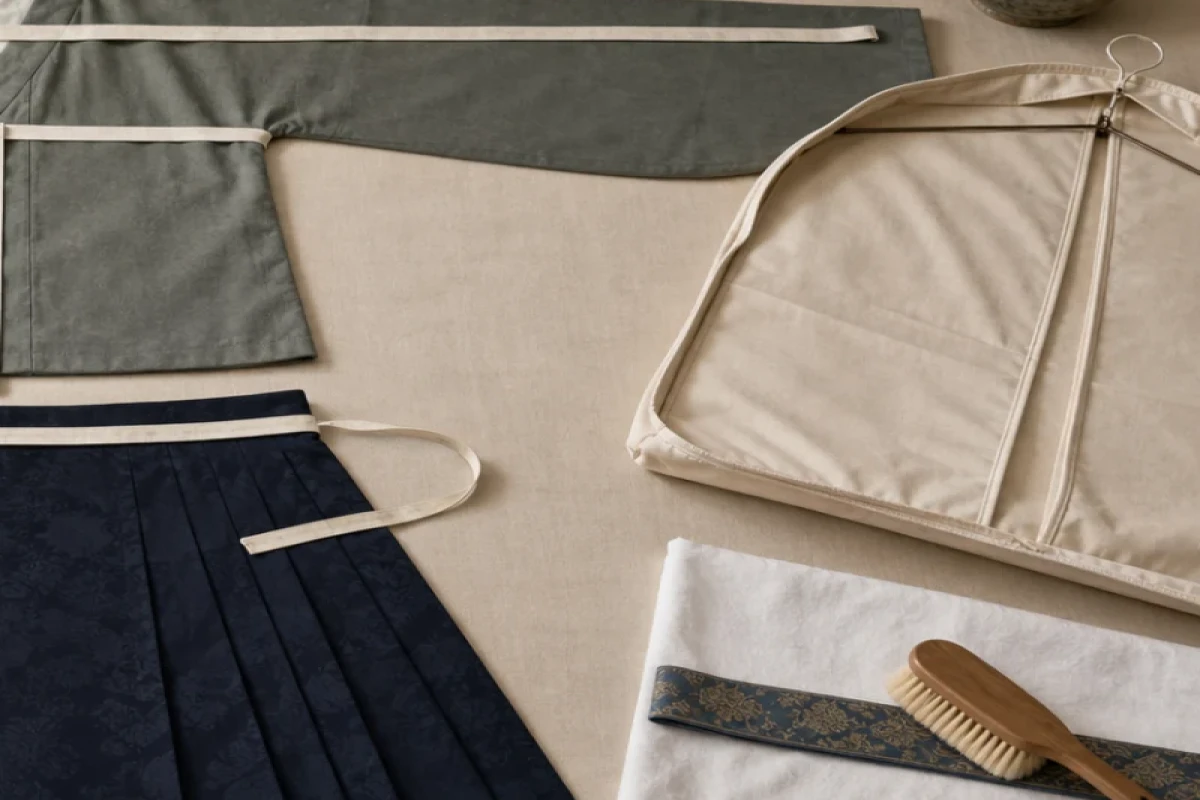
Plan care by component
Care follows the most vulnerable component, not the strongest fibre in the composition line. Dark dye, adhesive trim, metal, beadwork, brocade, and embroidery may each need different handling. Test only where appropriate, prevent snagging and colour transfer, and store heavy ornament without pulling the base cloth out of shape. When a key fact is absent, treat that absence as a practical risk: it may affect fit, classification, care, delivery, or return. One limitation deserves particular attention here: Height/weight-only recommendations, mixing half and full circumference, and machine-washing unknown decoration can cause irreversible problems. Ask for a measurement, material line, construction photograph, date, or policy instead of relying on a confident adjective.
Understand craft claims
Compare finished measurements with a garment that already fits; read the label and spot-test first, seeking specialist cleaning for complex brocade, embroidery or applied ornament. Terms such as handmade, heritage craft, brocade, or embroidery should point to a visible process and responsible maker. Machine assistance does not automatically reduce quality, just as handwork does not guarantee neat construction. The useful description explains which step was done, with what material, and to what standard.
The value of Hanfu sizing and care becomes clearer after imagining the second and fifth wear, not only the arrival-day photograph. Consider cleaning, storage, simple repair, compatibility with existing layers, and whether the piece can serve more than one appropriate setting. Repeated comfortable use is a stronger measure of value than decorative density alone.
Choose for long-term wear
A strong purchase balances appearance with movement, climate, care time, repairability, and repeat use. Ask how the garment will feel after several hours and what happens after the first cleaning, not only how it photographs on arrival. That is where material knowledge becomes practical value. Museum and heritage sources can explain a named technique in Hanfu sizing and care; only the maker or laboratory record can certify the fibre and making method of the item being sold.
A sound decision about Hanfu sizing and care should remain easy to explain: what the garment or offer actually is, why it suits the intended use, which limitations still matter, and what must be checked again at purchase or before dressing. If that explanation depends on guessing a hidden structure or policy, the uncertainty is still part of the choice.