

Many readers first meet the definition of Hanfu through a photograph, a product name, or an occasion they need to dress for. A useful guide looks past that first impression and connects visible construction, material, fit, movement, and context so the final choice still makes sense away from the campaign image.
See the complete garment system
Hanfu is not one dynasty’s uniform but a family of historical Han dress forms readable through structures such as right-over-left cross collars, upper-and-lower garments and robes. A Hanfu form is more than a familiar outline. It is a system of separate pieces, collar and opening, fastening points, waist control, length, and dressing order. Looking at the complete system prevents a skirt, accessory, or atmospheric portrait from standing in for the whole garment.
Before choosing the definition of Hanfu, define the real occasion, the hours of wear, the expected movement, the climate, and the points that cannot be compromised. Collar, opening, panels, fastening, and dressing order should agree before a period name is trusted. Starting from those needs prevents an attractive photograph or a familiar label from making the decision on the reader’s behalf.
Read collar, opening, and separate pieces
Read neckline, lapel direction, body panels, sleeves, waistline, lower-garment construction and dressing sequence; motifs and hair accessories are secondary. The neckline and opening are the quickest structural clues, but they must be read with the body panels and lower garment. A cropped photograph may hide the decisive feature; a front view alone can also conceal tie direction, back construction, or whether two apparent layers are actually one modern piece.
Read a page about the definition of Hanfu from the whole garment toward the details: front, side, back, opening, inner layers, fastening, measurements, and included pieces. A close-up may be excellent for embroidery yet useless for judging proportion. When views disagree, the complete structure deserves more weight than the most dramatic image.
| Form question | Object or diagram evidence | Reconstruction limit |
|---|---|---|
| Collar and opening | Complete neckline, overlap direction, closure points, and body panels | The key opening is cropped or replaced by a modern collar |
| Upper/lower relation | Read neckline, lapel direction, body panels, sleeves, waistline, lower-garment construction and dressing sequence; motifs and hair accessories are secondary. | A single skirt, top, or accessory is presented as a complete system |
| Date and reconstruction | Collection number, excavation or publication context, date range, and stated reconstruction choices | One late or ceremonial object is made universal for an era |
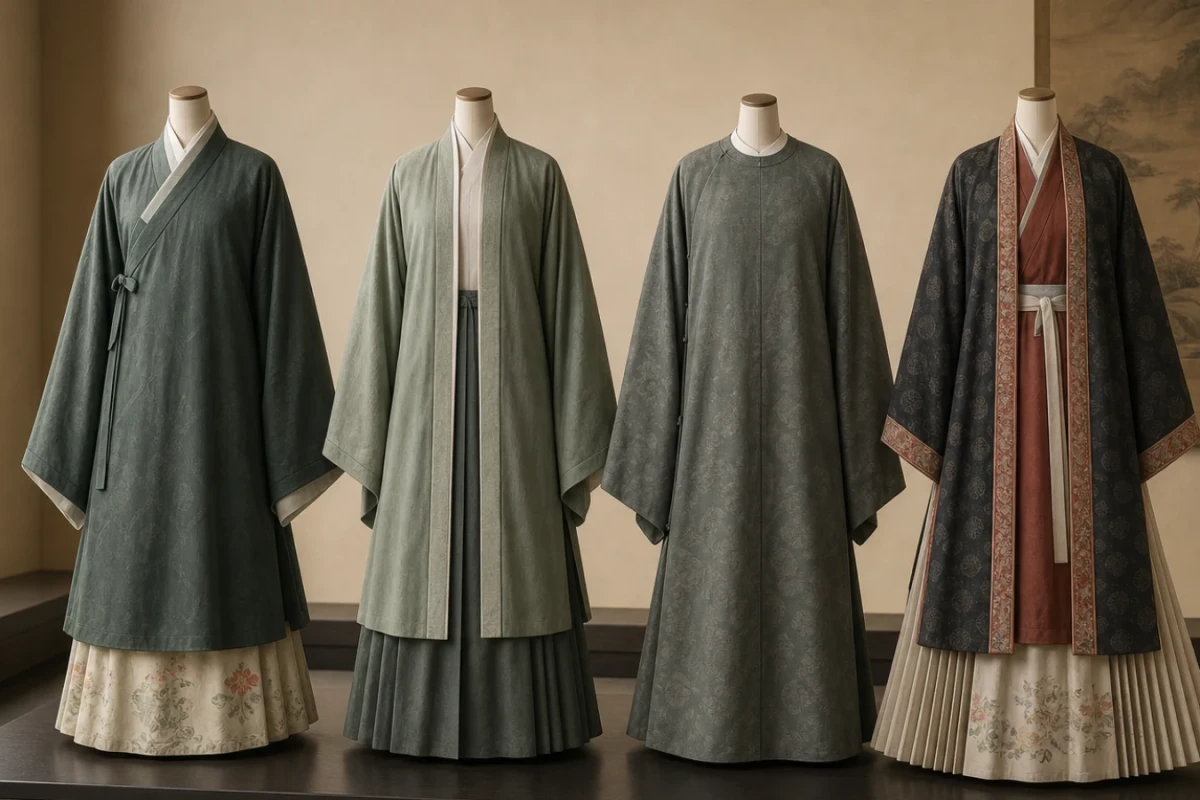
What historical sources can establish
Museum objects, excavated material, paintings, institutional essays, and transmitted texts answer different questions. A dated object can support its own construction and context, while an image may clarify wearing appearance without revealing every seam. No single source represents an entire dynasty or every social setting. the definition of Hanfu must also work away from the camera. Try the planned underlayers and shoes, then sit, walk, climb a step, raise both arms, and repeat the longest action required by the occasion. A small imbalance at the waist, collar, cuff, or hem often becomes obvious only after several minutes of movement.

Proportion, fabric, and dressing order
When a modern maker turns fragmentary evidence into a wearable garment, proportion and material require judgment. Sleeve width, hem, lining, fabric weight, and underlayers affect movement as much as the named form. A good reconstruction explains these choices instead of hiding them behind a dynasty label. When a key fact is absent, treat that absence as a practical risk: it may affect fit, classification, care, delivery, or return. One limitation deserves particular attention here: Substituting gufeng aesthetics or screen costume for structural reading collapses Han-inspired fashion, studio costume and other ethnic dress into one label. Ask for a measurement, material line, construction photograph, date, or policy instead of relying on a confident adjective.
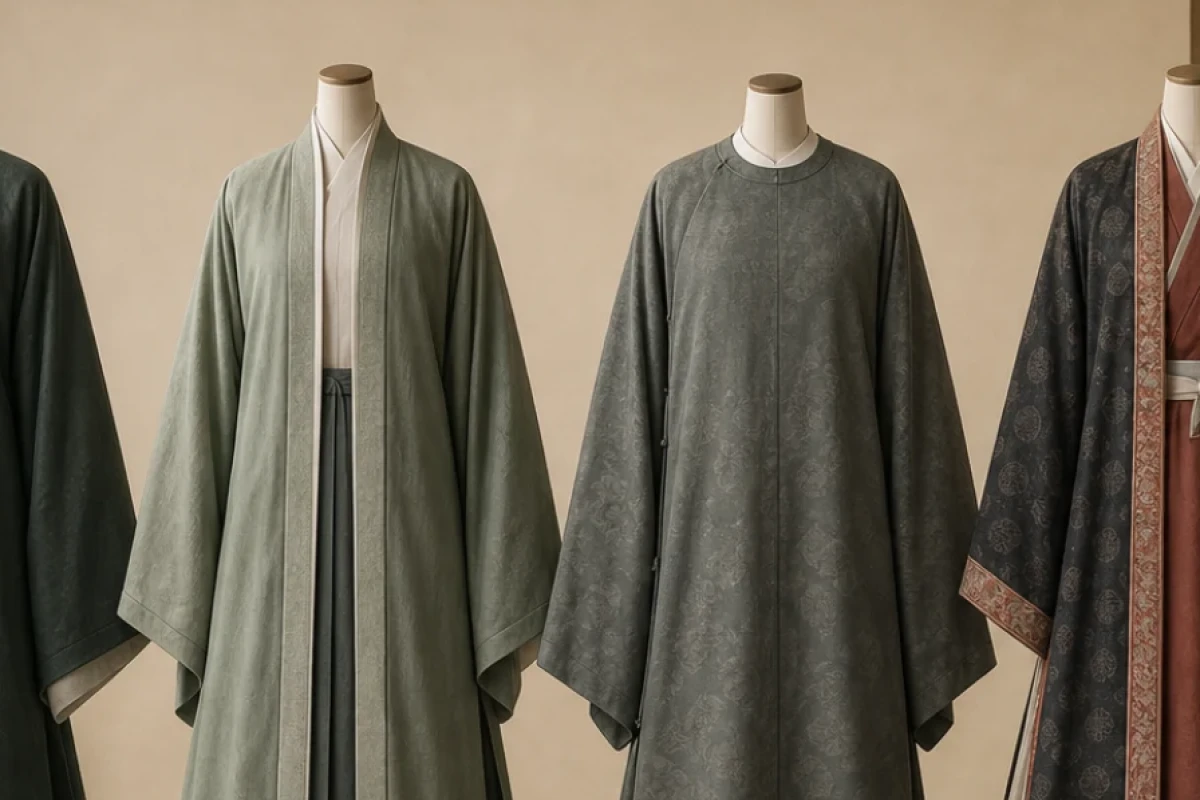
Where modern reconstruction begins
Begin with observable construction terms, then compare garments with museum objects and documented reconstructions rather than memorizing dynasty labels. Modern zips, elastic, synthetic blends, simplified layers, and adjusted lengths may make everyday wear easier. They are not automatically wrong, but they should be described as adaptations. That distinction lets buyers choose between study, ceremony, photography, stage use, and ordinary daily wear with clear expectations.
The value of the definition of Hanfu becomes clearer after imagining the second and fifth wear, not only the arrival-day photograph. Consider cleaning, storage, simple repair, compatibility with existing layers, and whether the piece can serve more than one appropriate setting. Repeated comfortable use is a stronger measure of value than decorative density alone.
How to reach a careful conclusion
A careful conclusion names the form supported by visible structure, cites the source that supports the limited historical point, and identifies what remains a modern choice. This approach is slower than matching a silhouette to a mood board, but it gives the reader a result that can be checked and used. A historical source supports only its documented object, period, status, and construction claim; it is not proof for every modern garment called the definition of Hanfu.
A sound decision about the definition of Hanfu should remain easy to explain: what the garment or offer actually is, why it suits the intended use, which limitations still matter, and what must be checked again at purchase or before dressing. If that explanation depends on guessing a hidden structure or policy, the uncertainty is still part of the choice.