Many readers first meet SHEIN new-Chinese-style and Hanfu products through a photograph, a product name, or an occasion they need to dress for. A useful guide looks past that first impression and connects visible construction, material, fit, movement, and context so the final choice still makes sense away from the campaign image.
Start with the garment in front of you
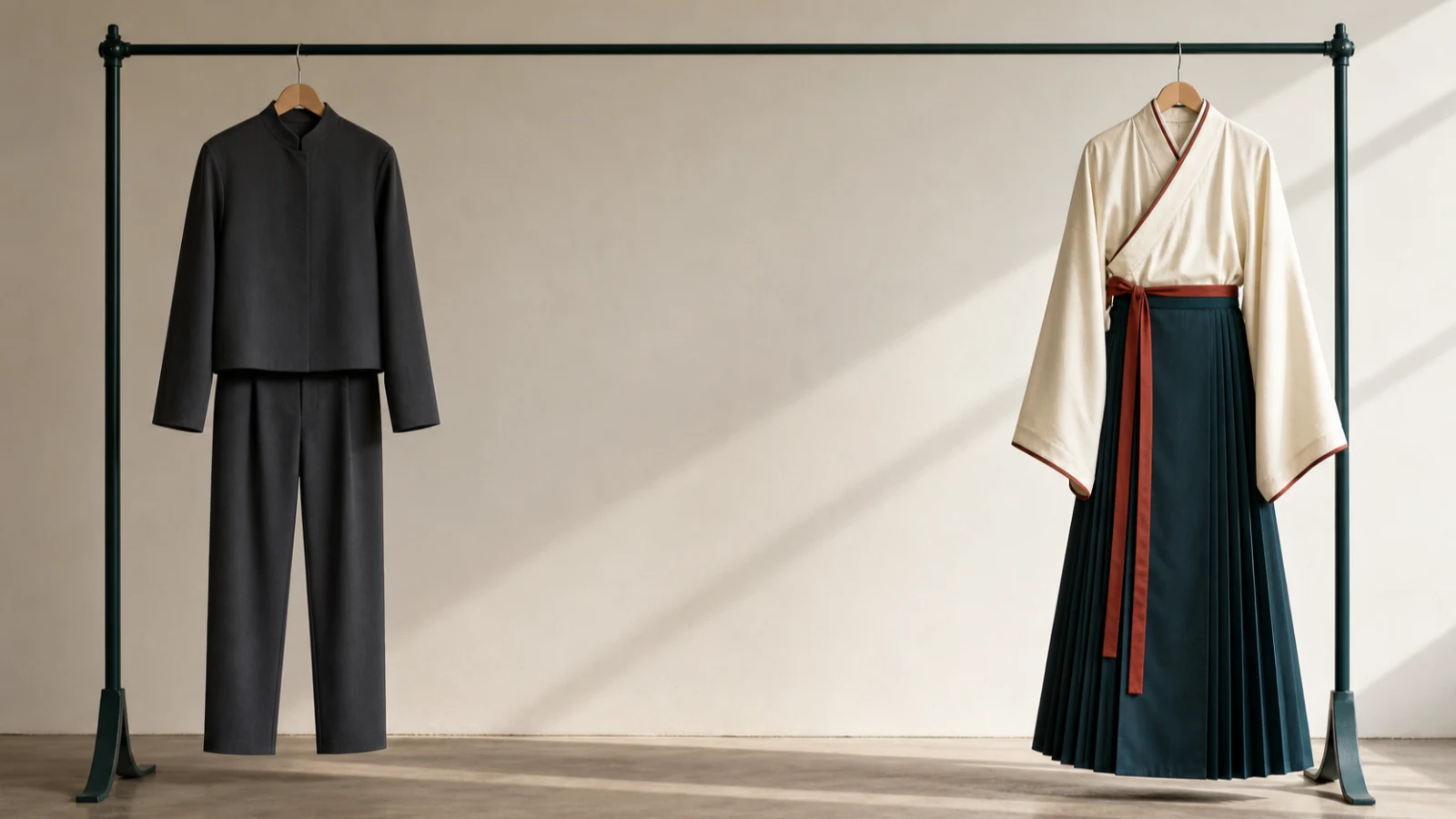
“New Chinese style” is a contemporary fashion label; it does not automatically indicate identifiable Hanfu construction such as cross-collar closure, mamian panels or a yuanling robe. New-Chinese-style, Han-inspired fashion, and historically named Hanfu can all be beautiful, but they describe different design relationships. Begin with the visible garment—its pieces, seams, collar, closure, waist, and hem—before deciding which cultural or historical term is accurate.
Before choosing SHEIN new-Chinese-style and Hanfu products, define the real occasion, the hours of wear, the expected movement, the climate, and the points that cannot be compromised. Modern tailoring and historical reference can coexist, provided that neither is hidden behind the other. Starting from those needs prevents an attractive photograph or a familiar label from making the decision on the reader’s behalf.
Collar and closure reveal the pattern
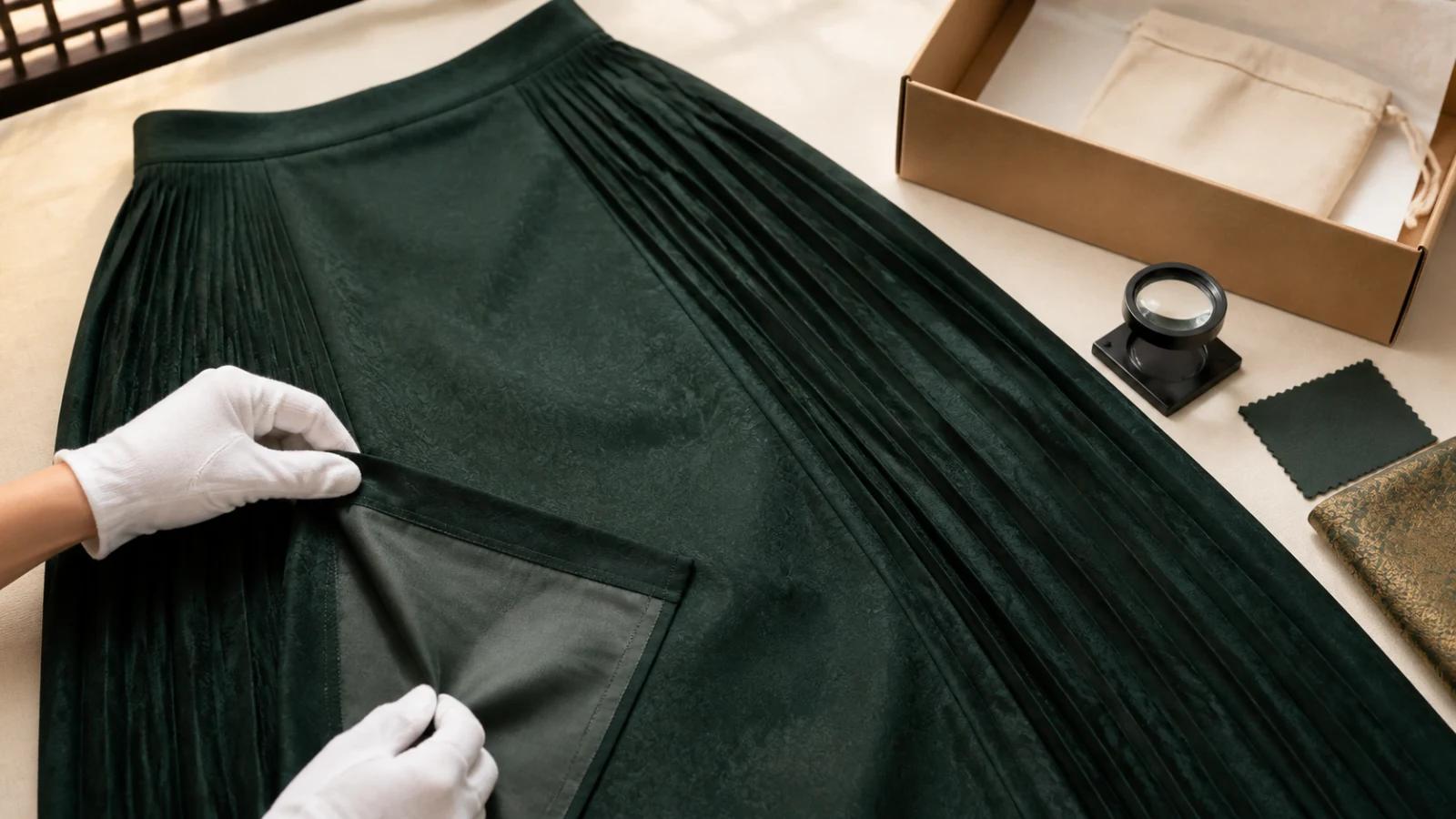
Read seam lines and closure first, then the title keywords; front/back flat lays, internal ties and an opened skirt reveal more than atmospheric model shots. A stand collar, frog fastening, diagonal front, zip, dart, or one-piece dress changes how a garment is constructed and worn. None of these details is inferior; naming them plainly simply prevents a modern pattern from being mistaken for a historical form because of embroidery or a campaign setting.
Read a page about SHEIN new-Chinese-style and Hanfu products from the whole garment toward the details: front, side, back, opening, inner layers, fastening, measurements, and included pieces. A close-up may be excellent for embroidery yet useless for judging proportion. When views disagree, the complete structure deserves more weight than the most dramatic image.
| Design layer | Visible construction evidence | Honest label |
|---|---|---|
| Silhouette and styling | Record hem, waist, sleeve, layer, and intended movement | Atmosphere is used as proof of historical form |
| Collar and closure | Read seam lines and closure first, then the title keywords; front/back flat lays, internal ties and an opened skirt reveal more than atmospheric model shots. | A standing collar, zip, or modern one-piece is relabelled as a historical Hanfu form |
| Reference and adaptation | Name the specific borrowed element and the modern pattern or material choice | The copy claims reconstruction without an object or documented pattern source |
Historical reference or modern design
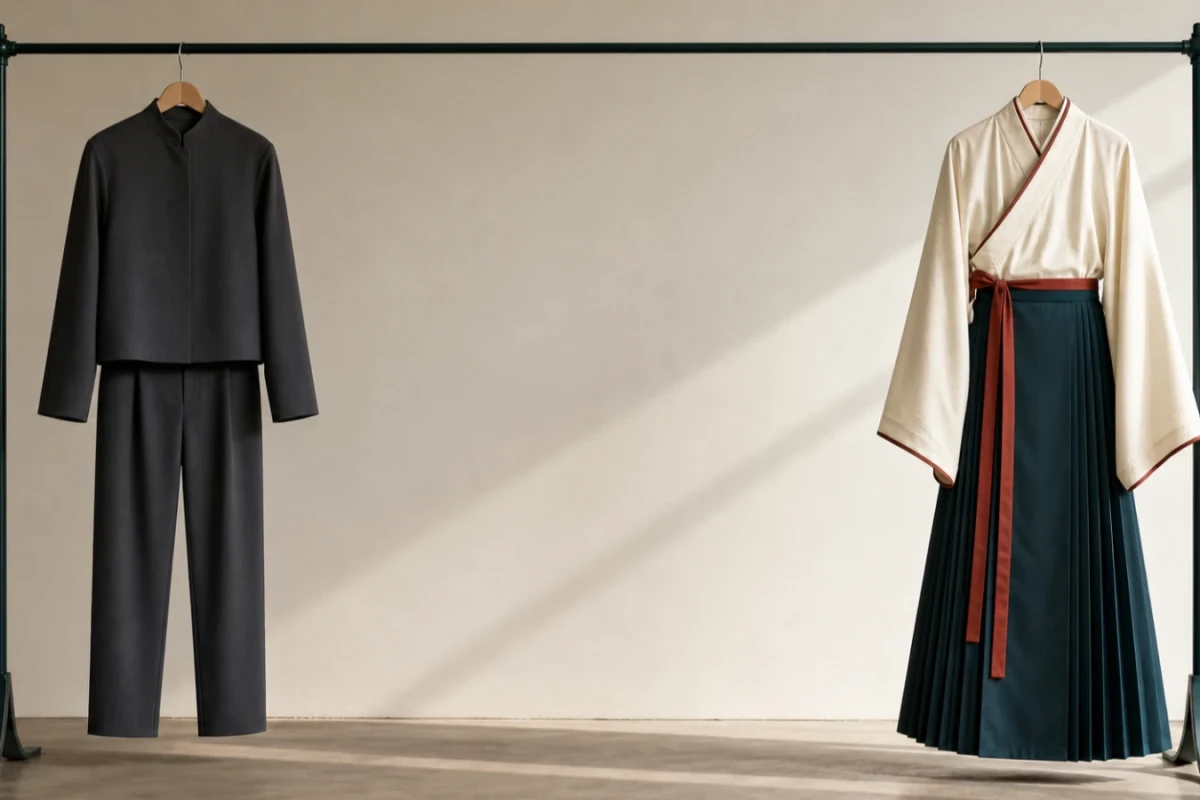
A designer may quote a sleeve line, textile, motif, or fastening without attempting reconstruction. A reconstruction makes a stronger claim and therefore needs a bounded object, image, pattern, or institutional source. Inspiration should remain inspiration when the surviving evidence does not support more. SHEIN new-Chinese-style and Hanfu products must also work away from the camera. Try the planned underlayers and shoes, then sit, walk, climb a step, raise both arms, and repeat the longest action required by the occasion. A small imbalance at the waist, collar, cuff, or hem often becomes obvious only after several minutes of movement.

Fabric, proportion, and movement
Modern fabrics and tailoring can improve ease, durability, or care, while also changing drape and proportion. Check whether the garment allows sitting, walking, reaching, and layering in the intended setting instead of judging only the still photograph chosen for the product page. When a key fact is absent, treat that absence as a practical risk: it may affect fit, classification, care, delivery, or return. One limitation deserves particular attention here: Fast-fashion listings often use frog buttons, embroidery or stand collars as generic Chinese-style signals, creating a mismatch if the buyer expects a historically structured garment. Ask for a measurement, material line, construction photograph, date, or policy instead of relying on a confident adjective.
Style it under an honest name
Label items as contemporary new Chinese style, Han-inspired fashion or identifiable Hanfu form, then choose everyday hybrids separately from form-specific ceremonial wear. The most convincing styling follows the garment’s actual structure. Contemporary shoes, a restrained bag, or simple hair can suit a modern adaptation better than borrowed historical accessories that conflict with the collar, waist, or fastening. An honest label gives the wearer more freedom, not less.
The value of SHEIN new-Chinese-style and Hanfu products becomes clearer after imagining the second and fifth wear, not only the arrival-day photograph. Consider cleaning, storage, simple repair, compatibility with existing layers, and whether the piece can serve more than one appropriate setting. Repeated comfortable use is a stronger measure of value than decorative density alone.
Choose the setting that suits it
Use historically named Hanfu when the form and occasion call for it, and use new-Chinese-style or Han-inspired fashion when modern design is the point. The useful question is not which label sounds grander, but which description helps the wearer understand what they are buying and how it will behave. Historical sources may explain the referenced element in SHEIN new-Chinese-style and Hanfu products, but they do not convert a modern garment into a reconstruction or certify a retail claim.
A sound decision about SHEIN new-Chinese-style and Hanfu products should remain easy to explain: what the garment or offer actually is, why it suits the intended use, which limitations still matter, and what must be checked again at purchase or before dressing. If that explanation depends on guessing a hidden structure or policy, the uncertainty is still part of the choice.