
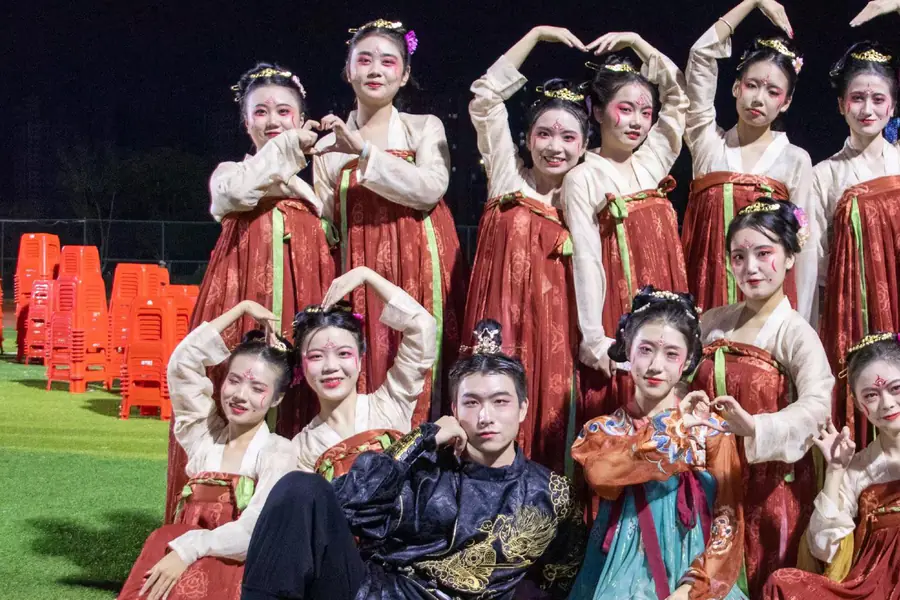
The short answer: outdoor hanfu shoots rarely fail on taste. They fail on three things nobody settled in advance: wind turning a wide sleeve into a knot, a hem that drags on wet ground, and a budget built on an inspiration photo that never included the jewelry. The list below maps each of those to a decision you can make before you leave the house.
Why wind changes the outfit, not just the photo
Hanfu in motion is a different garment from hanfu on a hanger. Long sleeves fill with air, pleated skirts open as you walk, layered robes change shape when you turn. That is why it photographs well, and why crowded, narrow or windy locations are harder to manage in an enormous sleeve or a floor-length hem.
Wind is not the enemy; uncontrolled wind is. Turn it into a variable you control. Pick a lee: a wall, the far side of a hedge, under a covered walkway. For a still portrait, put the subject upwind of the camera. For a moving shot, wait for the gust, or have someone off-frame work a fan.
Give the shutter room. To hold a wide cuff's shape in the air, shoot at 1/500 second or faster. Slower than that and the sleeve is a white smear.
One more thing gets skipped: sheer fabric reveals its underlayers in direct sun. Put the full outfit on near a window or step outside before the shoot, not at the location.
The floor hem: measure it, then decide
A hem that touches the ground is a logistics problem, not an aesthetic one. Wet grass, gravel, stone steps, an escalator: any of these turns a dragging hem into a cleaning cloth.
The measurement takes a minute. With the shoes you plan to wear, measure from waistband to the top of the shoe. A hem above the shoe is safe for walking. A hem exactly at the ground needs a plan. A hem clearly pooling needs an alteration or a different location.
The plan is not a pocket full of safety pins. Pinning a hem on site leaves holes in gauze and pulls embroidery. If the length is wrong, deal with it through alteration, or through the care guidance on the product page, rather than improvising fasteners that may damage the cloth.
Hem-safe options are not scarce: an ankle-length ma mian, an ankle-length ruqun, or a daily set that was never floor-length to begin with. If the sweeping hem is the whole point, give it twenty minutes of the shoot and change into something shorter for the walk between locations.
Jewelry in the inspiration photo may be sold separately
This is the line item that falls out of most budgets. Hair crowns, dangling pins, waist ornaments, earrings: in reference images these are frequently separate purchases. A listing that says "set" usually means the garment layers, not the hairpiece. Read the inclusions on the product page, and when it is ambiguous, ask whether the piece in the photo comes with it.
Budget the whole look: garment, hairpiece, waist ornament, shoes, underlayer. Listing them separately is more reliable than estimating one number from a photo. Individual accessories look inexpensive; assembling a full set is a different order of spend.
Accessories also change the shooting rhythm. Beaded and dangling pieces hit your face in wind and snag sheer fabric. Long tassels and wide sleeves will find each other. For movement shots, keep jewelry close to the head and short; save the long tassels for a still close-up.
The 48-hour rehearsal: sit, walk, turn
Do not test the outfit standing in front of a mirror. Put the whole thing on and do four things: sit down, stand up, walk ten steps, turn once on the spot. If the skirt needs correcting after every step, that is a fit problem. Asking a photographer to work around it means the shoot waits while you adjust.
Sitting is the step people skip. Layered outer robes bunch behind the waist, the skirt's front panel opens, and a long beizi catches on chair legs. Sit on a sofa and at a dining chair at home, once each, before you find out on location.
Then pack against a list: the full outfit and every tie, the shoes you measured in, a small pouch for jewelry, a clean cloth to sit on outdoors, the underlayer you need, and one photo of the finished look you are aiming for. Ties and hidden hooks are the items most often left behind; run down the product page and tick them off.
| Risk on the day | Check before you go | Fix on site |
|---|---|---|
| Wind lifting the sleeve | Will the cuff and hem blow up? | Change position behind a lee, bring a fan, shoot 1/500 |
| Hem dragging | Measure ground clearance in your shoes | Shorten, or cut the dragging shots short |
| Jewelry sold separately | Does the listing include the hairpiece? | Buy the piece in advance, or shoot without it |
| Sheer fabric in sun | How does the underlayer read in daylight? | Add a slip, or switch to a backlit silhouette |
| Hours of sitting and walking | Is there slack to re-tie the band? | Re-tie back at the car instead of enduring it |
Choose in the order you can control, and ask what is included
Location first, silhouette second. Wind, crowds and uneven ground argue for a narrower sleeve and an ankle hem. A studio, a still day and room to restage a shot are what justify the large sleeve and the floor hem.
Buy the accessories that stay put first. Pins, small crowns and earrings are far more controllable in wind than long tassels and floating scarves. A waist ornament should tie tight; a long dangling waist piece swings through every walking shot. Fill the gaps from the accessories category. If you are unsure how pieces should pair, read the hair and accessories guide first; it pairs by collar and waistline rather than by copying a photo.
To skip the matching step entirely, look at daily sets with hems that do not drag. You can wear them to work afterwards, which beats buying a floor-length skirt for one afternoon.
Aftercare belongs in the plan too. Clean hair pieces by material; metal and beaded pieces only need a wipe with an alcohol or antibacterial cloth. Wash the garment by hand, dry it in the shade, steam it, iron on the lowest setting, and skip bleach. Deal with sand and marks the same day, because a night in the bag makes them set.
Every outdoor checklist ends at the same question: what does this set actually contain? A listing that says set may be a top and a skirt only. Hairpieces, waist ornaments, shoes and underlayers are listed separately. Ask once for the full count of pieces you need, then confirm sizing and inclusions through contact. One conversation beats five separate orders and an extra shipping charge.
Sizing matters more outdoors than in a studio: five centimeters of hem is the difference between walking and shuffling across a lawn. Send body measurements, height and the heel you plan to wear, and ask for a recommendation based on the movements you actually want to shoot.
Wind, hem, jewelry, the sit-and-walk test: all four can be handled at home. What has to be confirmed before you leave is what the set contains and which shoes the length was measured against. Start from accessories and daily sets with shorter hems, then send the piece count and your measurements through contact.
FAQ
Do I have to buy the exact jewelry from the photo?
No. Confirm what the set includes first, then fill the gap from the accessories category with pieces that stay put. Long tassels and floating scarves are hard to manage in wind; they suit a still close-up, not a walking shot.
Can I still shoot large sleeves on a windy day?
Yes, with a different method: find a lee, bring a fan, shoot at 1/500 second or faster, and accept that some frames will not work. When the wind is strong enough to throw the sleeve across your face, switch to a narrow sleeve or a seated pose.
Does a floor-length hem always need shortening?
It depends on the ground and the clock. Dry, flat ground for twenty minutes is fine. Wet grass, gravel, stone stairs or an escalator is not. Do not pin the hem on site; pins leave holes in gauze and pull embroidery.
How much testing does the outfit actually need?
Sit, stand, walk ten steps, turn once. It passes only if you do not have to adjust the skirt afterwards. While seated, watch whether the outer robe bunches behind your waist, the front panel opens, or the beizi catches on the chair legs.
References
Sources were used to check facts and practice, not to borrow claims; no price, sales or ranking figures appear in this article.
- Yunavelle — Hanfu Photoshoot Outfits: Styles, Colors & Practical Tips (2026-10-12) — retrieved 2026-10-23T18:31:12+08:00
- Olive Girl — Hanfu Photoshoot: Complete Guide — retrieved 2026-10-23T18:31:15+08:00
- Nüwa Hanfu — Store FAQ — retrieved 2026-10-23T18:31:13+08:00
Cover image: Allervous, CC BY-SA 4.0, via Wikimedia Commons (cropped; same license).


