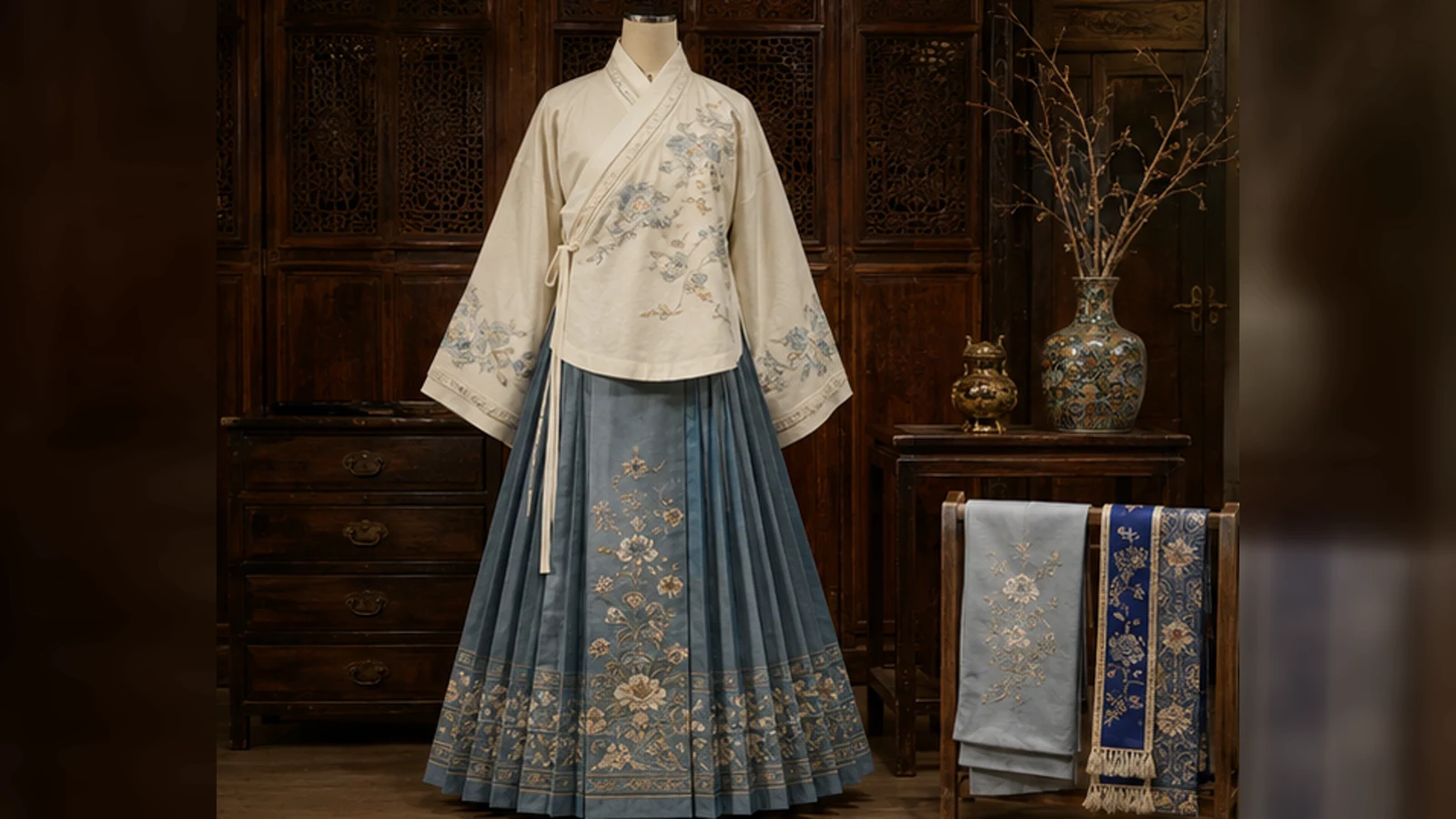
Han Occasions & Craft: Festival vs Daily Dress begins with a practical question: how does Han dress work during Daily, wedding, festival and ritual? In Nationwide, dress can change with locality, season, age, role, and the nature of the event. The aim is therefore not to build a costume formula, but to understand how Cross-collar Hanfu forms: ruqun, mamian, yuanling is prepared, worn, and cared for in context.
1. Match the outfit to the event
Before dressing for Daily, wedding, festival and ritual, establish the wearer’s actual role: participant, host, performer, visitor, member of the community, or someone wearing a clearly labelled modern adaptation. For Han dress in Nationwide, that role affects formality, permitted movement, photography, and whether local guidance is needed. The event name by itself does not determine one correct outfit.
Changing one layer can alter formality, season, and local character without turning the outfit into a different community’s dress. For Han at Daily, wedding, festival and ritual, ask a local organiser or knowledgeable participant when the event carries rules that a visitor may not see. Listening first prevents a styling choice from creating inconvenience or disrespect.
2. Build the layers from the inside out
Build Cross-collar Hanfu forms: ruqun, mamian, yuanling in the order that lets each layer support the next. Check underlayers, opening, ties or fasteners, waist position, footwear, and any piece that needs another person’s help. A stable base matters more than adding every visible ornament; if the foundation twists or slips, decoration will make the problem heavier rather than more authentic.
An upper-and-lower ensemble depends on the relation between top, skirt or trousers, waist fastening, overlap, and the layer visible beneath. During preparation, take front, side, and back views for personal adjustment, then check that no fastening bears all the load. The goal is a calm, secure silhouette that still lets the wearer breathe and use the space comfortably. For Han dress, a stable sequence is always more useful than last-minute ornament.

3. Set waistline and length for movement
Rehearse the actions that will actually happen during Daily, wedding, festival and ritual: sitting, greeting, walking outdoors, climbing, dancing, travelling, serving, or remaining still for a long period. With Han clothing, watch the hem, sleeves, waist, headwear, and attached objects. Nothing should block sight, catch on the ground, or require constant correction.
Waist position, hem length, sleeve room, and the balance of separate pieces should be judged while sitting, walking, and raising the arms. Repeat the most demanding action several times while wearing the planned shoes and underlayers. If Cross-collar Hanfu forms: ruqun, mamian, yuanling loosens, twists, or catches, correct the support or simplify the outfit before relying on decorative pins.

4. Choose cloth for season and duration
Plan for the temperature, weather, and duration in Nationwide. The relevant material range—Silk, cotton-linen, brocade and embroidery—may contain components that react differently to heat, moisture, rubbing, pressure, or colour transfer. Follow the maker’s care instructions for the most delicate component, provide a breathable underlayer where appropriate, and never assume that one community label supplies a universal wash rule. Material-specific care is essential to the long life of Han dress.
Because top and lower garment may use different cloth, fibre, weave, lining, and ornament should be considered piece by piece. With Silk, cotton-linen, brocade and embroidery, pack only suitable repair and weather protection: a clean cloth, spare non-damaging fastening, breathable cover, or maker-recommended care item. Emergency adhesive, heat, or aggressive stain treatment can permanently damage a valued piece. Material-specific care is essential to the long life of Han dress.

5. Add ornament without hiding structure
Accessories should support the clothing system rather than cover it. When working with Cloud, floral, dragon/phoenix motifs, choose one clear visual focus and keep attachment points secure. Avoid inventing a ritual explanation for a pattern, mixing sacred or status-bearing objects into a fashion look, or pairing a recognisable headdress with an unrelated base garment simply because the colours match. This restraint lets the workmanship of Han dress remain visible.
For Han styling, let Cloud, floral, dragon/phoenix motifs remain connected to the garment or maker who supplied it. Modern jewellery and bags can be quiet companions, but imitation insignia or an unrelated ceremonial object changes the cultural claim of the whole look.
6. Recognise local and family choices
Local etiquette and personal choice still matter within Han dress practices across regions, periods, and social settings in China. Ask before photographing, touching, borrowing, or reproducing a distinctive object, and describe the exact locality and event when sharing images. One photograph cannot establish dynasty, rank, reconstruction basis, or ritual status; cross collars, skirts, and round collars require separate construction checks rather than a generic historical look. A respectful caption says what is known without assigning a participant an identity or ceremonial role from appearance alone.
In photographs from Nationwide, keep the setting and participant role in the caption when they are known, and do not recycle one person or garment as proof of several local forms. One photograph cannot establish dynasty, rank, reconstruction basis, or ritual status; cross collars, skirts, and round collars require separate construction checks rather than a generic historical look. That restraint leaves room for people to describe themselves. Local voices remain central to any account of Han clothing.
7. Rehearse the complete outfit
Complete the outfit early enough to wear it for at least an hour before the event. Recheck fastening, movement, footwear, weather, transport, privacy, and a safe way to store removed layers. If the piece is a contemporary interpretation, label it that way; appreciation does not require presenting a new commercial garment as an old community original. That final distinction supports informed and repeatable wear of Han dress.
After Daily, wedding, festival and ritual, air and store each component according to its actual material, remove pressure from heavy ornament, and note any loose seam before the next wear. Care is part of respectful use: it values the labour in the piece and makes repeat wearing possible. That final distinction supports informed and repeatable wear of Han dress.
At a glance
- Han community and local context: Han dress practices across regions, periods, and social settings in China
- Han geographic scope: Nationwide
- Han main clothing structure: Cross-collar Hanfu forms: ruqun, mamian, yuanling
- Materials and techniques commonly discussed for Han: Silk, cotton-linen, brocade and embroidery
- Commonly documented occasions for Han: Daily, wedding, festival and ritual