

Many readers first meet daily-commute Hanfu styling through a photograph, a product name, or an occasion they need to dress for. A useful guide looks past that first impression and connects visible construction, material, fit, movement, and context so the final choice still makes sense away from the campaign image.
Begin with the occasion
Commuter Hanfu is first a movement system: stride, sitting, stairs, bags and outerwear layering come before visual complexity. A successful Hanfu outfit starts with what the wearer will actually do. A wedding guest, museum visit, outdoor festival, stage performance, and long train journey demand different movement, weather protection, formality, and dressing time even when the same garment looks attractive in a photograph.
Before choosing daily-commute Hanfu styling, define the real occasion, the hours of wear, the expected movement, the climate, and the points that cannot be compromised. The occasion, weather, duration, movement, and dressing sequence matter before colour and jewellery are refined. Starting from those needs prevents an attractive photograph or a familiar label from making the decision on the reader’s behalf.
Build a sound garment base
During fitting, record sleeve contact with desks, hem clearance, tie pressure under bag straps, seated waist ease and outsole grip. Confirm the inner layer, collar and opening, upper-lower relationship, waist position, skirt orientation, hem, and footwear before adding jewellery or hair ornaments. If the base is wrong, accessories only make the mismatch busier and can hide the structural detail that should remain visible.
Read a page about daily-commute Hanfu styling from the whole garment toward the details: front, side, back, opening, inner layers, fastening, measurements, and included pieces. A close-up may be excellent for embroidery yet useless for judging proportion. When views disagree, the complete structure deserves more weight than the most dramatic image.
| Wear sequence | Movement rehearsal | Adjustment or stop |
|---|---|---|
| Base garments | Correct inner layer, collar/closure, upper-lower relation, waist position, and hem | An accessory hides or contradicts the garment structure |
| Action and duration | Sit, walk, climb, lift arms, and repeat the real event movement | Hem, sleeve, belt, or headwear cannot remain secure |
| Weather and social setting | Temperature, rain plan, footwear surface, photography, and local dress guidance | Comfort, modesty, safety, or host guidance cannot be met |
Use proportion before decoration
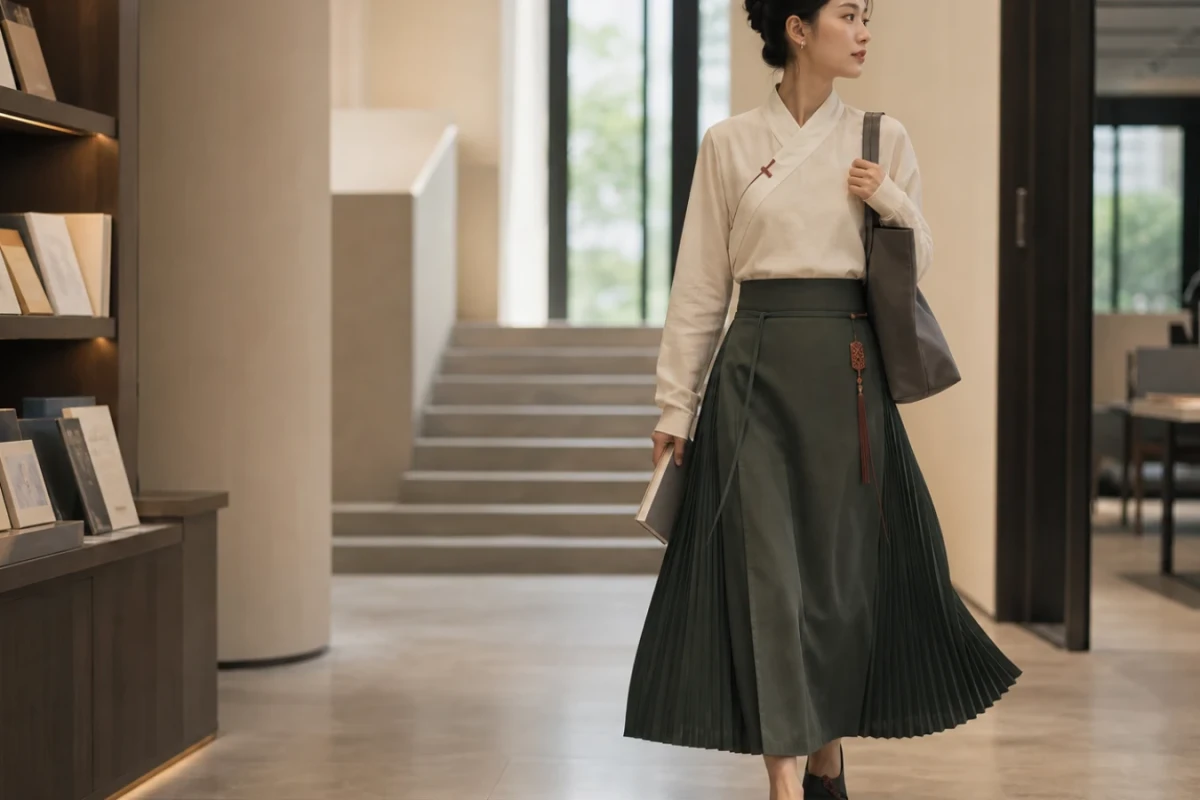
Proportion comes from the relationship among neckline, shoulder, sleeve, waist, skirt length, and visual weight. Choose one main focus and let the remaining elements support it. Repeating every motif in the hair, belt, bag, and shoes usually weakens the outfit instead of making it richer. daily-commute Hanfu styling must also work away from the camera. Try the planned underlayers and shoes, then sit, walk, climb a step, raise both arms, and repeat the longest action required by the occasion. A small imbalance at the waist, collar, cuff, or hem often becomes obvious only after several minutes of movement.

Rehearse weather, fit, and movement
Try the complete base layer while sitting, walking, climbing steps, lifting the arms, and repeating the longest action in the event. Check heat, rain, wind, floor surface, restroom practicality, and the time needed to dress. A mirror pose cannot reveal these pressures. When a key fact is absent, treat that absence as a practical risk: it may affect fit, classification, care, delivery, or return. One limitation deserves particular attention here: Overlong sleeves, loose pendants, pocketless outfits with large bags and body-only sizing all reduce repeat wear. Ask for a measurement, material line, construction photograph, date, or policy instead of relying on a confident adjective.
Secure accessories with restraint
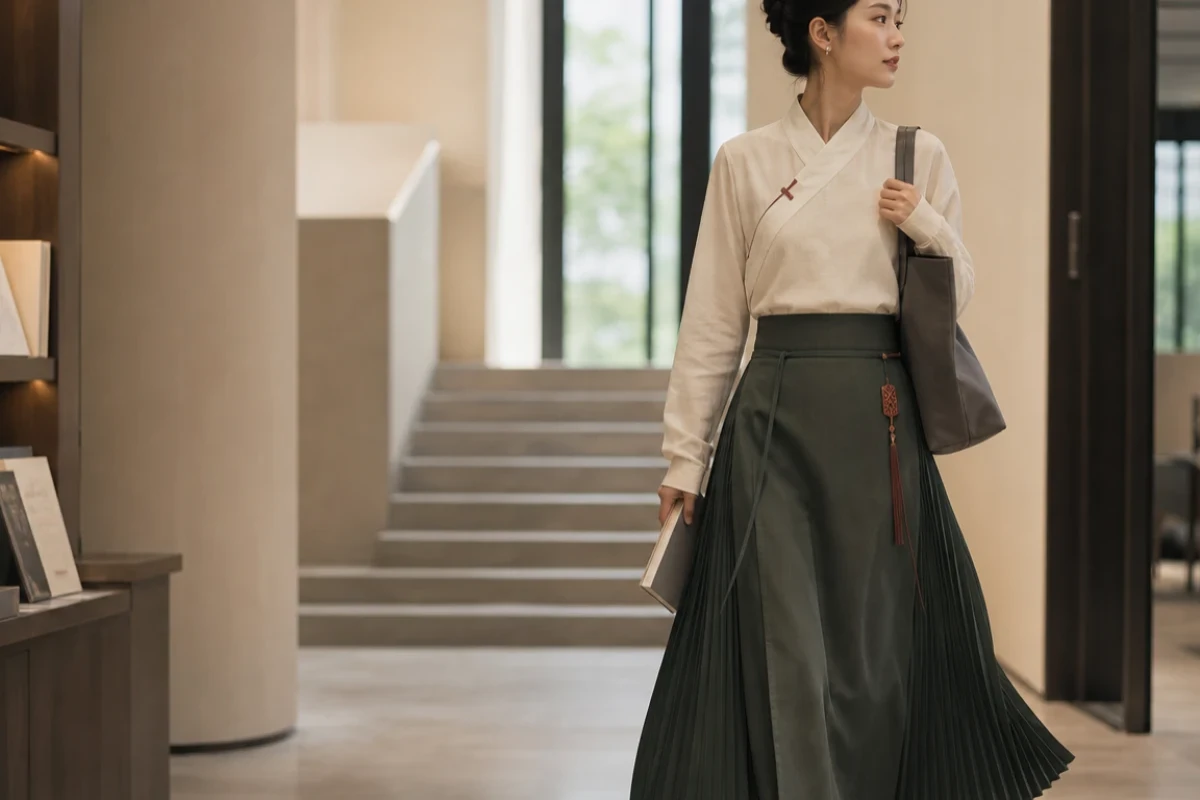
Prioritize controllable qiyao or mamian bottoms and a light outer layer, keep one accessory focal point, and judge fit after twenty minutes of sitting and walking. Hair ornaments, belts, pendants, bags, and fans must remain secure without dragging the collar, twisting the skirt, or catching the sleeve. One well-placed main ornament is often enough. Historical inspiration is most convincing when it respects the garment form rather than covering it.
The value of daily-commute Hanfu styling becomes clearer after imagining the second and fifth wear, not only the arrival-day photograph. Consider cleaning, storage, simple repair, compatibility with existing layers, and whether the piece can serve more than one appropriate setting. Repeated comfortable use is a stronger measure of value than decorative density alone.
Make the final adjustment
Photograph the outfit from the front, side, and back after the movement test. Correct the waist, hem, collar, and balance first; only then adjust colour or ornament. The finished look should still feel comfortable and coherent after an hour, not merely for the first photograph. Historical evidence may guide a form in daily-commute Hanfu styling, while the present occasion, wearer, organiser, and safety conditions determine the final styling decision.
A sound decision about daily-commute Hanfu styling should remain easy to explain: what the garment or offer actually is, why it suits the intended use, which limitations still matter, and what must be checked again at purchase or before dressing. If that explanation depends on guessing a hidden structure or policy, the uncertainty is still part of the choice.